
When implementing AI video in regulated industries, we must prioritize data privacy by securing user consent and anonymizing sensitive information, like biometric data.
Identifying risks early, such as data poisoning or overlapping laws like GDPR, keeps us ahead of hefty fines.
Mechanized tools like AIMonk optimize compliance monitoring, while clear internal policies and up-to-date team training build a culture of responsibility.
Ready to excel in these fundamentals? Stick with us, and you’ll reveal smarter strategies to keep innovation ethical and compliant.

Key Takeaways
- Prioritize user consent and implement data anonymization to maintain privacy in AI video deployments.
- Conduct thorough risk assessments to identify and mitigate compliance threats specific to regulated industries.
- Utilize automated monitoring tools for real-time compliance tracking and anomaly detection in AI video systems.
- Develop internal policies emphasizing transparency, data retention, and regular compliance audits for AI video usage.
- Provide continuous, scenario-based training to staff on AI video ethics and evolving regulatory requirements.
Ensuring Data Privacy in AI Video Compliance
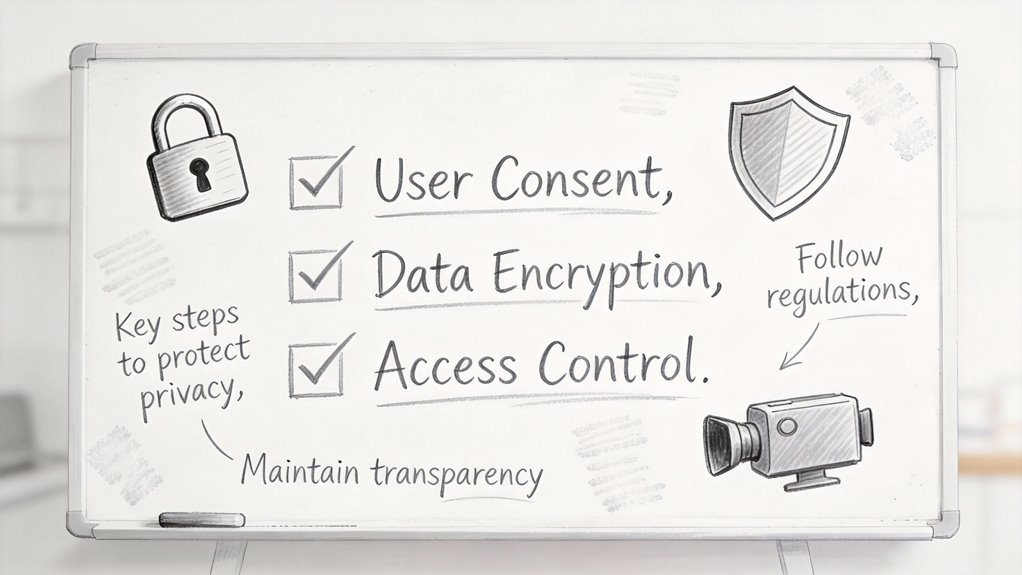
While utilizing AI video technologies offers incredible potential for enhancing security and operational efficiency, ensuring data privacy is not just a regulatory checkbox, it is our responsibility for protecting individuals’ rights and building trust. We must prioritize user consent, making sure everyone clearly understands and agrees to how their data is used, especially when sensitive biometric info is involved.
Incorporating data anonymization techniques is not just smart, it is crucial for minimizing risks while revealing innovation. Imagine securing a facility with AI-powered cameras that mask identities unless a verified threat is detected; that is privacy by design in action. By actively embracing these strategies, we do not just comply with privacy laws, we set a new standard that enables both organizations and individuals, proving that advanced tech and respect for privacy can perfectly coexist. Organizations must also address federal privacy laws and industry-specific regulations to build a comprehensive and compliant AI surveillance program.
Identifying Key Compliance Risks in AI Video for Regulated Sectors
As we plunge into the domain of AI video within regulated sectors, it is essential for identifying the key compliance risks that can make or break our success. Risk assessment becomes our frontline defense, spotting threats like data poisoning or rogue “shadow AI” tools before they wreak havoc. AI compliance tools can enhance this process by automating the detection of such risks, ensuring faster and more accurate identification of compliance issues within vast data sets, thus increasing operational efficiency.

Regulatory challenges aren’t just bureaucratic obstacles; they’re evolving, ranging from stringent EU AI Act fines topping €35 million to HIPAA’s privacy demands in healthcare. We have to steer through overlapping mandates like GDPR, all while juggling multi-jurisdictional rules that could claw back our market access. But here’s the exciting part: recognizing these risks early lets us innovate boldly yet responsibly. Embracing these intricacies isn’t just compliance, it’s a strategic advantage that future-proofs our AI video ventures with confidence and agility.
Leveraging Automated Tools for AI Video Compliance Monitoring
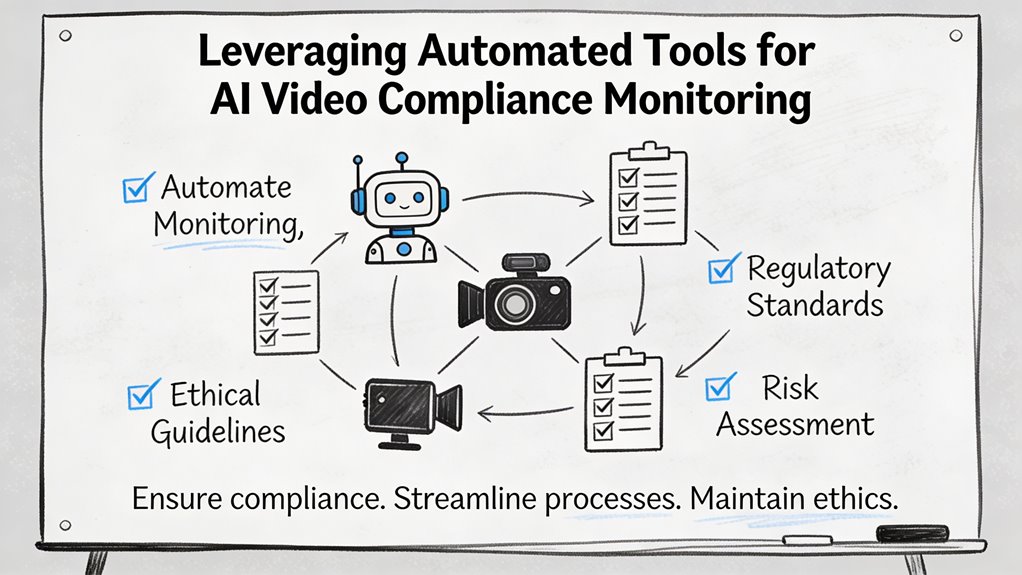
Because AI video compliance demands constant vigilance across complex environments and progressing regulations, leveraging mechanized monitoring tools isn’t just smart, it’s essential for keeping us ahead of the curve. Mechanized monitoring solutions like AIMonk and Lumana reshape compliance by using behavioral analysis to detect anomalies with near-human precision. This minimizes false positives and enhances accuracy. These tools also support real-time detection of threats such as intruders and unattended objects, further strengthening security operations.
Here’s how we benefit:
- Real-time alerts regarding safety and regulatory breaches keep us proactive, not reactive.
- Predictive threat detection anticipates risks before they escalate, cutting manual review time drastically.
- Flawless integration with existing systems means no costly overhauls, just smarter compliance.
Creating Internal Policies for AI Video Compliance
We’ve seen how mechanized tools can keep us alert and efficient in monitoring AI video compliance, but none of that matters without solid internal policies steering our efforts. Developing strong policy structures is our frontline defense, aligning with regulations like the EU AI Act and California’s AB3211. These policies aren’t just paperwork, they’re fluid guides ensuring transparency, data retention, and risk management throughout the AI lifecycle. Incorporating regular system testing and documenting AI development processes bolster these efforts by identifying legal issues early and reinforcing compliance.
Think of them as playbooks that enable us to embed compliance from day one, reducing legal risks by up to 70%. Regular compliance audits complement that by highlighting changing challenges early, so we avoid costly fines or reputational hits. When policy meets proactive oversight, we’re not just following rules, we’re pioneering a culture of responsible innovation in AI video implementation.
Training Your Team on AI Video Compliance Best Practices
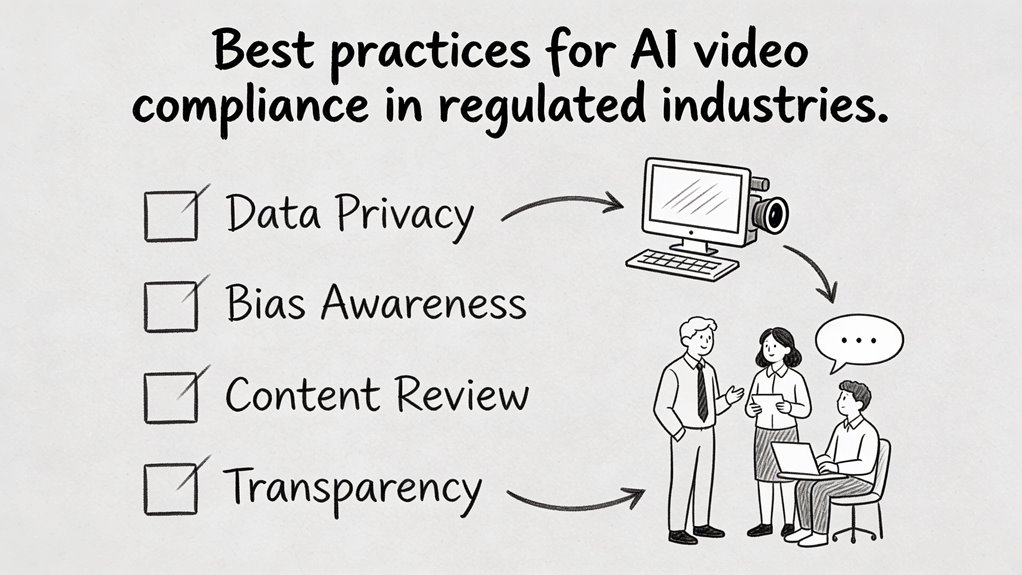
Although regulatory environments around AI video evolve at a dizzying pace, we can’t afford to let our training programs gather dust, as outdated compliance education creates more risk than relief. To stay ahead, we need to focus on employee engagement and measurable outcomes that actually matter.
Here’s how we can do this:
- Define clear, specific learning goals so employees can identify real-world AI compliance challenges, like when to override mechanized decisions.
- Incorporate interactive, scenario-based training with quizzes and simulations that enhance judgment skills and retention.
- Continuously update materials with legal input and track completion metrics to enhance the program and demonstrate practical improvements.
Additionally, incorporating insights on how synthetic media increases close rates can motivate your sales team while reinforcing compliance with ethical standards.
Frequently Asked Questions
How Do AI Video Compliance Rules Differ Between EU and Non-Eu Regions?
We see EU regulations enforcing strict labeling and transparency, while Non EU guidelines vary widely, causing legal discrepancies and compliance challenges. Together, we must innovate thoughtfully to steer through these advancing rules and stay ahead globally.
What Are the Penalties for Failing to Disclose AI Involvement in Video Content?
We face penalty examples like $5,000 fines in California and escalating amounts in New York for failing AI disclosure. Understanding disclosure implications helps us avoid these risks while embracing innovation responsibly and maintaining trust with our audience.
Can AI Video Compliance Automation Integrate With Existing Legal Case Management Systems?
Yes, we can integrate AI video compliance automation with existing legal case management systems. Although AI integration challenges exist, focusing on legal system compatibility guarantees smooth workflows and activates innovative efficiencies for modern legal practices.
How Frequently Should AI Bias Testing Be Conducted for Video Compliance?
We recommend bias testing frequency at least annually, aligning with compliance best practices. For innovative teams, increasing tests quarterly guarantees proactive bias detection, keeping AI video systems fair and flexible in rapidly-evolving regulatory environments.
What Audit Trails Are Required for Ai-Generated Video Decisions in Healthcare?
We need audit trails logging who accessed AI-generated video decisions, when, and why. These must meet audit requirements and regulatory standards, capturing system events, anomalies, and patient data flow for innovating securely in healthcare.