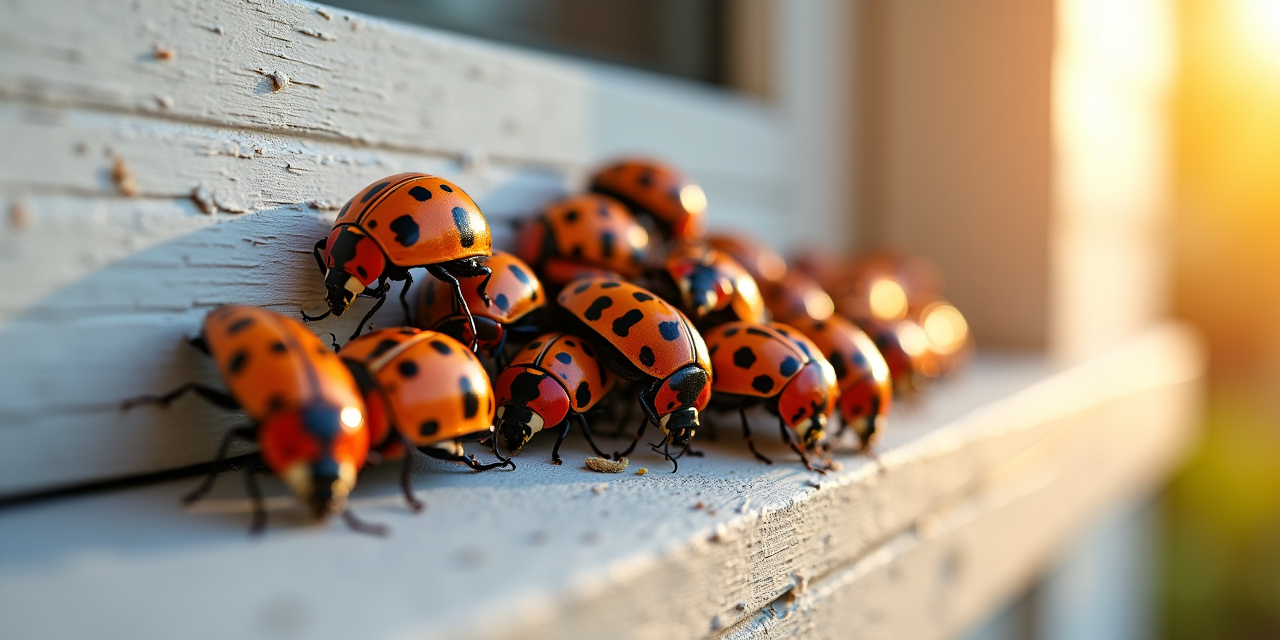
University of Kentucky Entomology places peak swarming to buildings between September and November. Westchester's current cool-night, sunny-afternoon pattern is the exact trigger.
The Short Version
This Pristine Pest news report covers a beetle most Westchester homeowners misidentify every September. It's one of the most common fall calls fielded across our Westchester service network, right alongside boxelder bugs and stink bugs. The orange, black-spotted insects clustering on siding and screens read as harmless garden ladybugs.
They are usually something else: the multicolored Asian lady beetle. It is a separate species, not a color variant of the native ladybug. It behaves very differently once fall arrives.
The U.S. Department of Agriculture introduced it to North America on purpose. University of Kentucky Entomology confirms the agency released it to fight crop pests.
Releases occurred across many states from the 1960s to the 1990s, targeting pecans and apples.
The beetle did its job on crops. It also picked up a habit native ladybugs never developed. It swarms buildings by the hundreds every fall.
Why "Just Ladybugs" Undersells the Problem
Calling it a ladybug isn't just imprecise. It changes how people react, and that's the actual issue.
Native ladybugs stay outdoors, rarely enter homes in numbers worth noticing, and don't bite. Asian lady beetles do all three of the opposite.
"They occasionally bite people, which can vary from slightly annoying to painful." Penn State Extension, on multicolored Asian lady beetles.
Penn State Extension says researchers still don't fully understand the behavior. "It is unknown why lady beetles bite people." It isn't a stinger. There's no venom, but it can break skin.
The Allergy Angle Most People Miss
A few beetles on a windowsill are a nuisance. A heavy indoor population is a different category of problem for some households.
"Rhinoconjunctivitis, asthma, and even angioedema of the face have been linked to lady beetle infestations in homes." Penn State Extension.
The beetles release a yellowish defensive fluid when crushed or threatened. This fluid causes its own reactions in some people.
Penn State Extension notes some people get a skin reaction. It often appears as a small, localized welt.
That fluid also stains light fabric, walls, and curtains, and carries a sharp, musty odor. The smell is often the first sign of a hidden wall-void cluster.
Ladybug or Asian Lady Beetle? The Tell Is on the Head
Color and spot count vary too much on both species to be reliable. The dependable marker sits just behind the head.
| Trait | Native Ladybug | Asian Lady Beetle |
|---|---|---|
| Marking behind head (pronotum) | Plain or lightly marked | White with a distinct black "W" or "M" |
| Body size | Smaller, more uniform | Larger, about 7mm (9/32 in.) |
| Enters homes in fall | Rarely, in small numbers | Yes, often by the hundreds |
| Bites people | No | Occasionally, cause not fully known |
| Linked to indoor allergy symptoms | No documented link | Yes, in heavy infestations |
Penn State Extension identifies a white pronotum with a black "W." Native species lack it.
If the mark is there, exclusion and cleanup matter more than a wait-and-see approach. If it isn't, the beetle on the sill is almost certainly harmless. It can be left alone or gently relocated outside.
Why They Pick One Wall, Every Year
Fall beetle behavior isn't random. It tracks light and heat with precision.
University of Kentucky Entomology notes the beetles favor sunny, southwest-facing walls. There, they search for crevices and protected winter spots. As autumn approaches, adults leave summer feeding sites for these protected places.
That means the same wall draws a crowd every year. Sealing the entry points is the only way to stop it. Gaps around window trim, siding laps, soffits, and utility penetrations are the usual openings.
Westchester's older, wood-trimmed colonials and stone facades give beetles plenty of gap options. That's part of why the swarm feels concentrated in older neighborhoods.
Technicians in our Westchester network report the same pattern call after call each fall: the complaint almost always starts on the southwest corner of the house, and it's almost always a return address from the year before. A wall that hosted a cluster last October is the first place to check this October, because the beetles are returning to the same overwintering voids, not picking a new spot at random.
What Actually Helps This Time of Year
Vacuuming clusters, rather than crushing them, avoids the staining odor and defensive fluid altogether. A shop vac with a disposable bag works best for large numbers.
Sealing gaps before the next warm afternoon prevents a repeat next fall. It's the same exclusion work that limits boxelder bugs and stink bugs. All three exploit identical entry points on warm, sunny walls.
Heavy repeat swarms, especially with a musty wall-void odor, need professional treatment before beetles disperse. Our general pest control team handles this seasonal exclusion work directly.
The glossary defines the underlying tactic in more depth. Exclusion means physically closing the gaps a pest uses to get inside.
Frequently Asked Questions
Are Asian lady beetles the same as ladybugs?
No. The multicolored Asian lady beetle is a separate, non-native species deliberately introduced from Asia by the USDA to control crop pests. Native ladybugs rarely enter homes in large numbers.
Asian lady beetles do. They carry a distinct black W or M mark behind their head.
Can Asian lady beetles bite?
Yes. Penn State Extension notes they occasionally bite people, ranging from barely noticeable to painful, and the exact reason they bite remains unclear to researchers. It is not a stinger and not venomous, but it can break skin.
Can Asian lady beetles trigger allergies or asthma?
Yes, in cases of heavy indoor infestation. Penn State Extension links large indoor populations to rhinoconjunctivitis, asthma, and in some cases facial swelling, plus skin welts from the beetles' defensive secretions.
Why are Asian lady beetles massing on my house now?
Cooling fall temperatures send adult beetles looking for protected overwintering sites. University of Kentucky Entomology notes swarms typically move to buildings from September through November, drawn to sunlit south and southwest-facing walls in the afternoon.
Sources
Last updated: September 21, 2026
This article is for general educational purposes only and does not constitute pest control advice. Pest identification and treatment should involve a licensed professional. Pristine Pest is a lead generation service connecting homeowners with licensed providers.
We are not a licensed pest control company and do not perform inspections or treatments. Read our full disclaimer.
Pristine Pest may receive compensation when you contact providers through this site. This does not affect content accuracy.