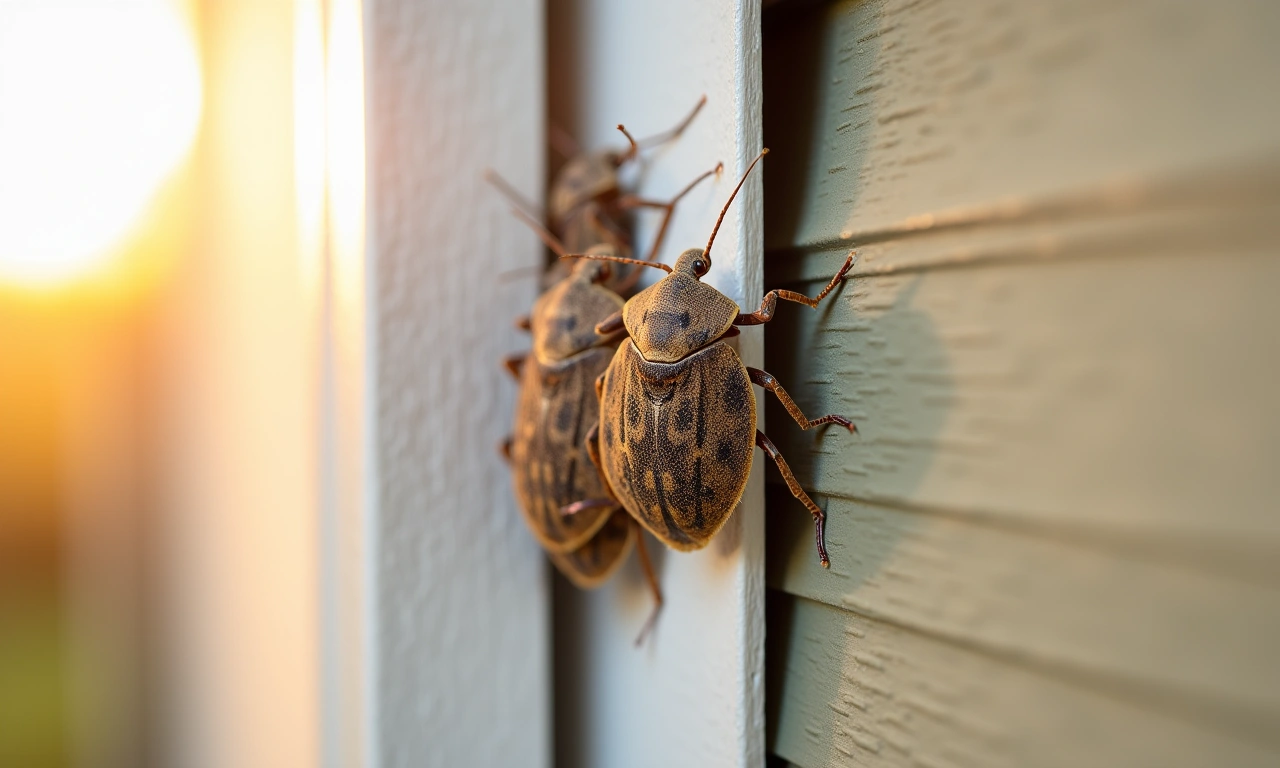
Falling temperatures are pushing brown marmorated stink bugs off host plants. They're moving onto Westchester structures to find a place to spend winter.
The Short Version
This Pristine Pest news report covers a fall pattern with a surprising backstory. This isn't just a household nuisance.
They're a documented crop pest. Mid-Atlantic apple growers lost roughly $37 million to the insect in 2010 alone. Some stone fruit growers lost over 90 percent of that year's harvest, per peer-reviewed research.
That same insect now treats Westchester siding like an orchard fence line. The trigger is diapause, a dormancy period tied to shortening daylight.
Preparing for diapause means finding shelter first. A window-frame gap and a bark crack read the same to a stink bug.
Westchester's housing stock makes this worse than a typical suburb. Older stone-and-shingle colonials and Tudors common in Scarsdale, Bronxville, and White Plains carry more masonry joints, wood trim seams, and chimney flashing than newer vinyl-sided construction, and each seam is a potential entry point. Providers in our network report the same pattern every September: the heaviest clusters show up on homes with south or west exposure and original, unreplaced trim, not on newer builds with tighter building envelopes.
Not Just a Nuisance: A Real Agricultural Pest
Brown marmorated stink bugs arrived from East Asia in the late 1990s. Pennsylvania was the first confirmed site. New York has had established populations for over a decade.
A boxelder bug feeds narrowly on boxelder, maple, and ash seeds. This species feeds on dozens of crops instead. Apples, peaches, peppers, tomatoes, soybeans, and ornamental plants are all documented hosts.
Feeding damage on fruit shows up as sunken, discolored patches called cat facing. That scarring makes produce unsellable at retail grade, even when the fruit is otherwise fine.
The same feeding behavior happens in home gardens. Tomatoes and peppers develop spongy, discolored patches beneath the skin wherever a stink bug fed.
Why They Target Your Walls as Temperatures Drop
Host plants die back in fall, so adult stink bugs lose their food source. Daylight hours shrink at the same time. Both signals point them toward finding winter harborage.
South and west-facing walls that catch afternoon sun read as promising real estate. So do gaps around soffits, chimney flashing, and utility penetrations.
Once one bug finds a good gap, it releases an aggregation pheromone. That scent recruits others to the same spot. A handful of bugs on a Tuesday can become dozens by the following week.
The Chemistry Behind "Don't Squish It"
Crushing a stink bug ruptures a pair of glands on its abdomen. Those glands store defensive aldehyde compounds the insect normally releases in small amounts when threatened.
Penn State Extension entomologists describe the same reaction homeowners report every fall.
"If many of them are crushed or sucked into a vacuum cleaner, their smell can be quite apparent." Pennsylvania State University Extension, brown marmorated stink bug fact sheet.
The same source notes direct skin contact can cause dermatitis in sensitive people. The odor compound can also stain light fabric, drywall, and trim.
A ruptured gland is the entire mechanism behind the smell. Sealed disposal, not contact, is the safer path.
Sealed disposal beats direct contact. A vacuum with a disposable bag works best. Empty it outside right away to keep the compound off skin and fabric.
Why Exclusion Beats Spraying
Indoor sprays only reach the bugs already inside a living space. They do nothing about the ones still queued up outside the siding.
Exclusion means sealing the gaps stink bugs use to get in. It addresses the entry point, not just the insect. Caulked trim, repaired screens, and sealed utility lines work on this cluster and next year's.
That's the idea behind integrated pest management: treat the access point, not the symptom. Our stink bug seasonal alert covers a room-by-room checklist. It also has the full fall-to-spring timeline for Scarsdale.
A licensed provider applying exterior treatment before peak season can reduce numbers at the source. But sealing still closes the door for good. Households can read our exclusion versus extermination comparison.
Given the local housing pattern above, older trim and masonry joints are worth checking first. A homeowner working through the exterior alone can prioritize south and west walls, chimney flashing, and any trim that has not been recaulked in the last few years, since those are the gaps a provider would flag first on a Westchester property.
Not the Same Bug as Its Fall Neighbors
Three different insects cluster on Westchester walls every September. Lumping them together leads to the wrong fix. A stink bug is shield-shaped and mottled brown, unlike the boxelder bug or lady beetle.
Diet is the real dividing line. Boxelder bugs feed on tree seeds. Stink bugs feed on crops instead, so agricultural agencies track them far more closely.
Frequently Asked Questions
Why is the brown marmorated stink bug considered an agricultural pest, not just a nuisance?
It feeds on apples, peaches, peppers, and dozens of other crops, scarring fruit and making it unsellable. Mid-Atlantic apple growers lost about $37 million to the insect in a single 2010 season.
Why shouldn't I vacuum or squish a stink bug?
Crushing or vacuuming a stink bug ruptures glands that release defensive aldehyde compounds. The result is a strong, lingering odor and a chance of staining fabric or drywall. A vacuum with a disposable bag, emptied outside immediately, is safer than direct contact.
Is exclusion really more effective than spraying for stink bugs?
Yes, for the fall invasion pattern specifically. Stink bugs enter through small gaps around siding, trim, and utility lines. Sealing those gaps stops next year's cluster at the source, while indoor sprays only reach the bugs already inside.
How is a stink bug different from a boxelder bug or Asian lady beetle?
Brown marmorated stink bugs are shield-shaped and mottled brown, unlike the narrow black-and-orange boxelder bug or the round, spotted lady beetle. All three cluster on sunny fall walls, but they are unrelated species with different diets and damage profiles.
Sources
Last updated: September 21, 2026
This article is for general educational purposes only and does not constitute pest control advice. Pest identification and treatment should involve a licensed professional. Pristine Pest is a lead generation service connecting homeowners with licensed providers.
We are not a licensed pest control company and do not perform inspections or treatments. Read our full disclaimer.
Pristine Pest may receive compensation when you contact providers through this site. This does not affect content accuracy.