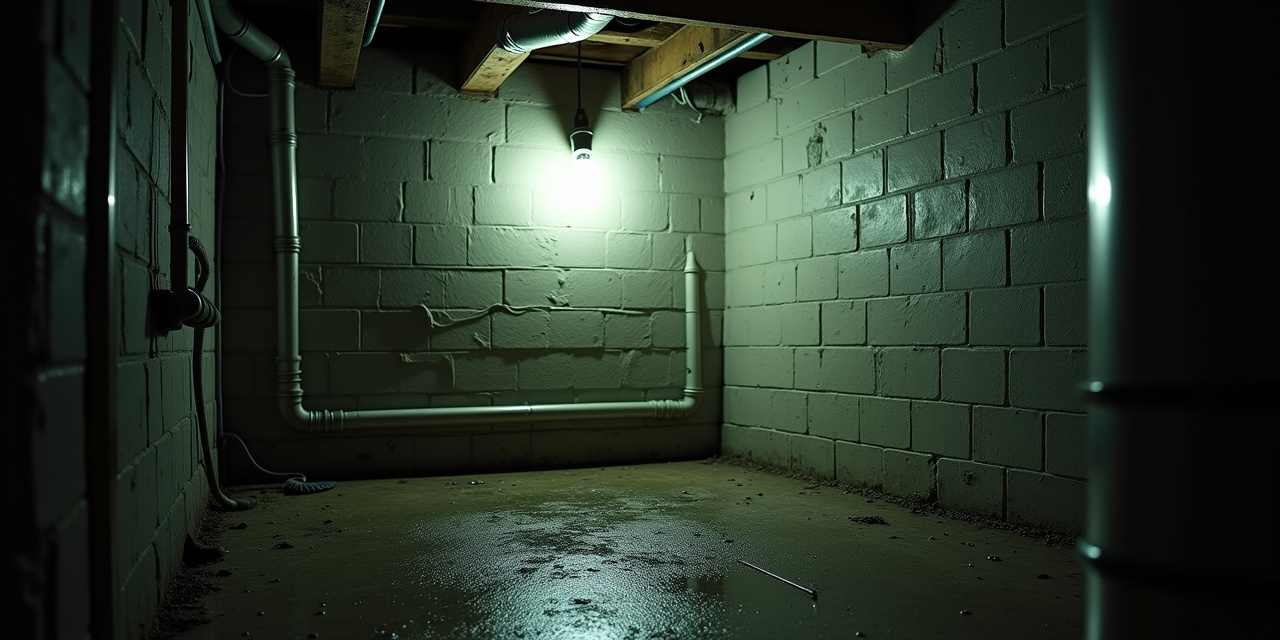
Both pests are showing up more often in Westchester basements and bathrooms. Outdoor humidity stays elevated into September, and homes hold onto summer moisture.
The Short Version
This Pristine Pest news report connects two pests homeowners usually treat as separate nuisances. Silverfish and house centipedes share one root cause: excess indoor humidity.
Silverfish prefer 75 to 95 percent relative humidity, according to Ohio State University Extension. House centipedes favor the same damp indoor spots. Bathrooms, laundry rooms, basements, closets, and crawl spaces all qualify, per Clemson's extension service.
Neither pest damages structures. Neither carries disease. Their real value is as an early warning sign, not a threat to eliminate.
Why Your Basement Looks Like a Rainforest to Them
Silverfish pull moisture directly from the surrounding air through their outer shell. That's why a poorly ventilated basement, crawlspace, or bathroom becomes a magnet once humidity climbs.
"Silverfish live and develop in damp, cool places...often in the basement, bathroom and kitchen." Ohio State University Extension, on silverfish habitat.
A bathroom running a hot shower daily without an exhaust fan holds humidity for hours. A basement with a slow leak or unvented dryer does the same, day after day.
House Centipedes Aren't the Problem. They're Proof of One.
House centipedes hunt other insects, including silverfish, cockroaches, bed bugs, and carpet beetle larvae. All of those pests thrive in the same damp conditions.
"House centipedes are agile predators of arthropods that are often considered pestiferous such as carpet beetle larvae, cockroaches, firebrats, flies, moths, bedbugs, crickets, silverfish, earwigs, and spiders." Clemson HGIC, on house centipede diet.
A house centipede in a bathroom or basement usually means one of two things. Either moisture is already high enough to support them. Or their prey has grown enough to draw a predator in.
Why a Pesticide-First Approach Usually Fails
A spray treatment kills the silverfish and centipedes present that day. It does nothing to the humidity that drew them in.
If the moisture source stays active, new individuals arrive on roughly the same timeline. That applies to a slow leak, a damp crawlspace, or an unused bathroom fan alike.
Homeowners often describe this as the problem "coming back." It never actually left. The underlying condition did.
What Dehumidification and Sealing Actually Fix
Running a dehumidifier targets the exact harborage conditions these pests need. A unit sized to the space, run through humid months, keeps humidity below their threshold.
Sealing gaps around pipes, sump pits, and foundation cracks closes off that moist air. That physical exclusion work outlasts any single treatment.
Fixing the actual leak removes the humidity source. That's true whether it's a roof, a gutter, or a missing fan. It addresses the cause, not just the symptom.
This is the same IPM logic pest professionals apply to carpenter ants and termites. Identify the moisture, correct it, then treat what's established. Our exterminator service and Home Shield Exclusion program both start with that inspection step.
Where Our Network Finds the Moisture, in Order
Across the service calls our network fields for this combination, the moisture source is rarely a mystery once someone looks in the right order. These are the spots that turn up an answer most often, checked in the sequence that wastes the least time:
- Sump pit lid. A loose or missing lid lets basement air pull straight off standing water. This alone can hold a room above 70 percent humidity even with a dehumidifier running.
- Bathroom exhaust fan. Hold a tissue to the vent while it runs. If it doesn't pull, it's venting into the attic or not venting at all, and the bathroom is holding shower humidity for hours instead of minutes.
- Dryer duct termination. A duct that ends inside the wall or crawlspace instead of outside dumps warm, wet air directly into the structure on every load.
- Grading at the foundation. Soil that slopes toward the house instead of away from it pushes rainwater against the foundation wall, which then migrates through as vapor even without a visible crack.
- Under-sink and water heater lines. Slow drips here rarely pool enough to notice visually, but they keep the surrounding cabinet or utility closet damp enough to sustain both pests indefinitely.
None of these fixes require tearing open a wall. Most are a caulk gun, a duct clamp, or a phone call to a roofer, and they resolve the humidity that a spray treatment alone never touches.
Frequently Asked Questions
Why are house centipedes and silverfish showing up together this fall?
Both pests need consistently damp air to survive. Silverfish prefer 75 to 95 percent relative humidity, according to Ohio State University Extension. House centipedes favor the same damp spots: bathrooms, laundry rooms, basements, closets, and crawl spaces, per Clemson HGIC.
Outdoor humidity climbs in late summer and early fall. An already-damp basement or bathroom becomes exactly what both species need.
Are house centipedes actually dangerous?
No. House centipedes rarely bite people, and when they do, the reaction is comparable to a minor bee sting. They prey on other household pests, including silverfish, cockroaches, and bed bugs.
Their presence is more useful as a signal than a threat on its own.
Will spraying get rid of silverfish and house centipedes for good?
A pesticide application can knock down what's currently active, but it does not change the humidity that drew them in. If the moisture source stays the same, new individuals move in on a similar timeline. Lasting control depends on fixing the moisture, not just treating the population currently present.
What humidity level actually stops these pests?
Keeping indoor relative humidity under roughly 50 percent removes the conditions silverfish need to survive long-term, since their stress threshold sits well above that. A dehumidifier in a basement, combined with sealing entry points and fixing any active leak, addresses both pests at the source instead of just the symptom.
Sources
Last updated: September 21, 2026
This article is for general educational purposes only. It does not constitute pest control advice.
Pest identification and moisture remediation should involve a licensed professional. Pristine Pest is a lead generation service connecting homeowners with licensed providers.
We are not a licensed pest control company and do not perform inspections or treatments. Read our full disclaimer.
Pristine Pest may receive compensation when you contact providers through this site. This does not affect content accuracy.